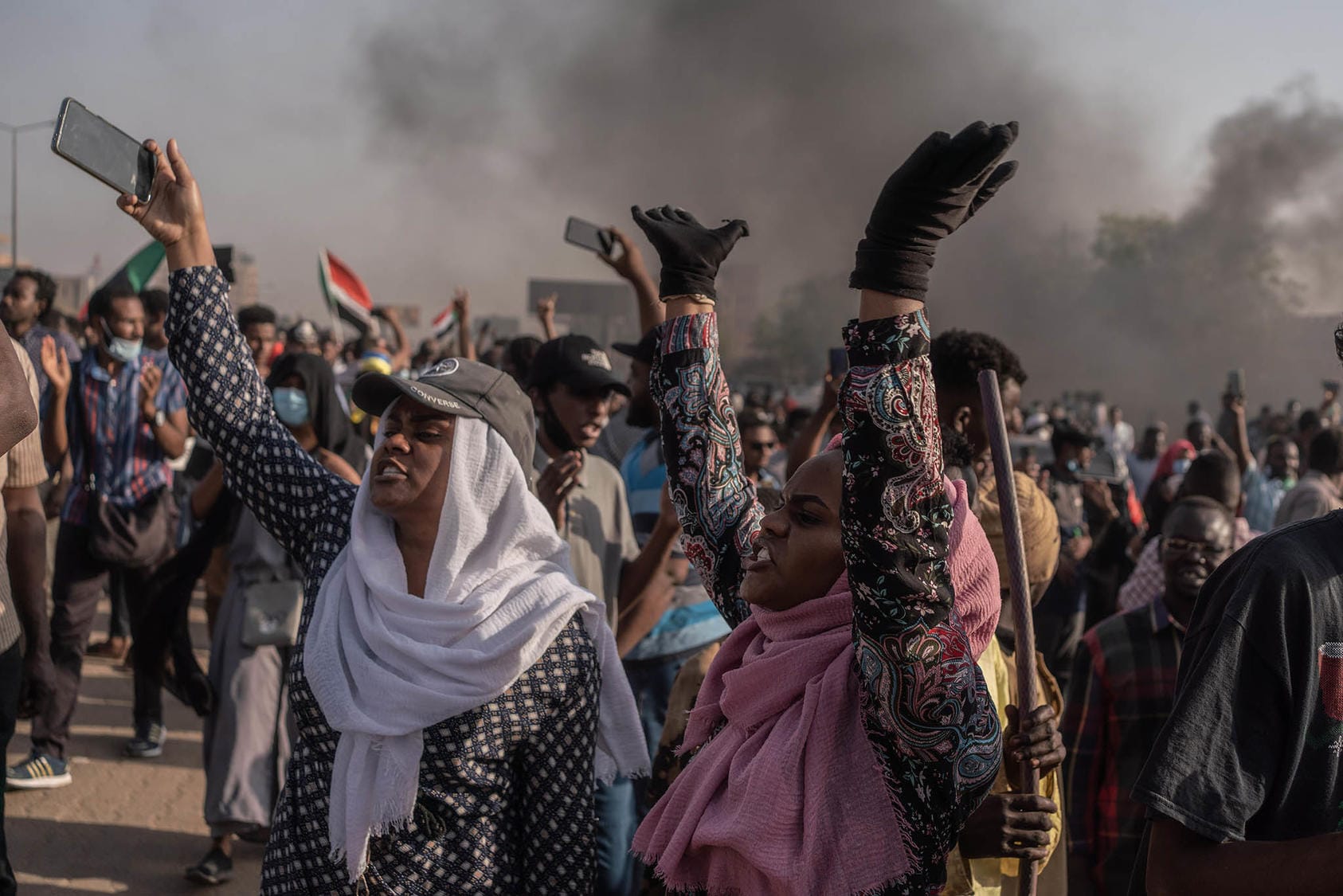
Sudan: In December 2018, after decades under Dictator Omar al-Bashir’s iron-fisted rule, civilians demanded through protests that were met with bullets what had long been denied — democracy. Within months, Bashir was gone, toppled by the very generals who once enforced his will. The country celebrated a revolution, but the promise of freedom was quickly betrayed by the enforcement of military rule.
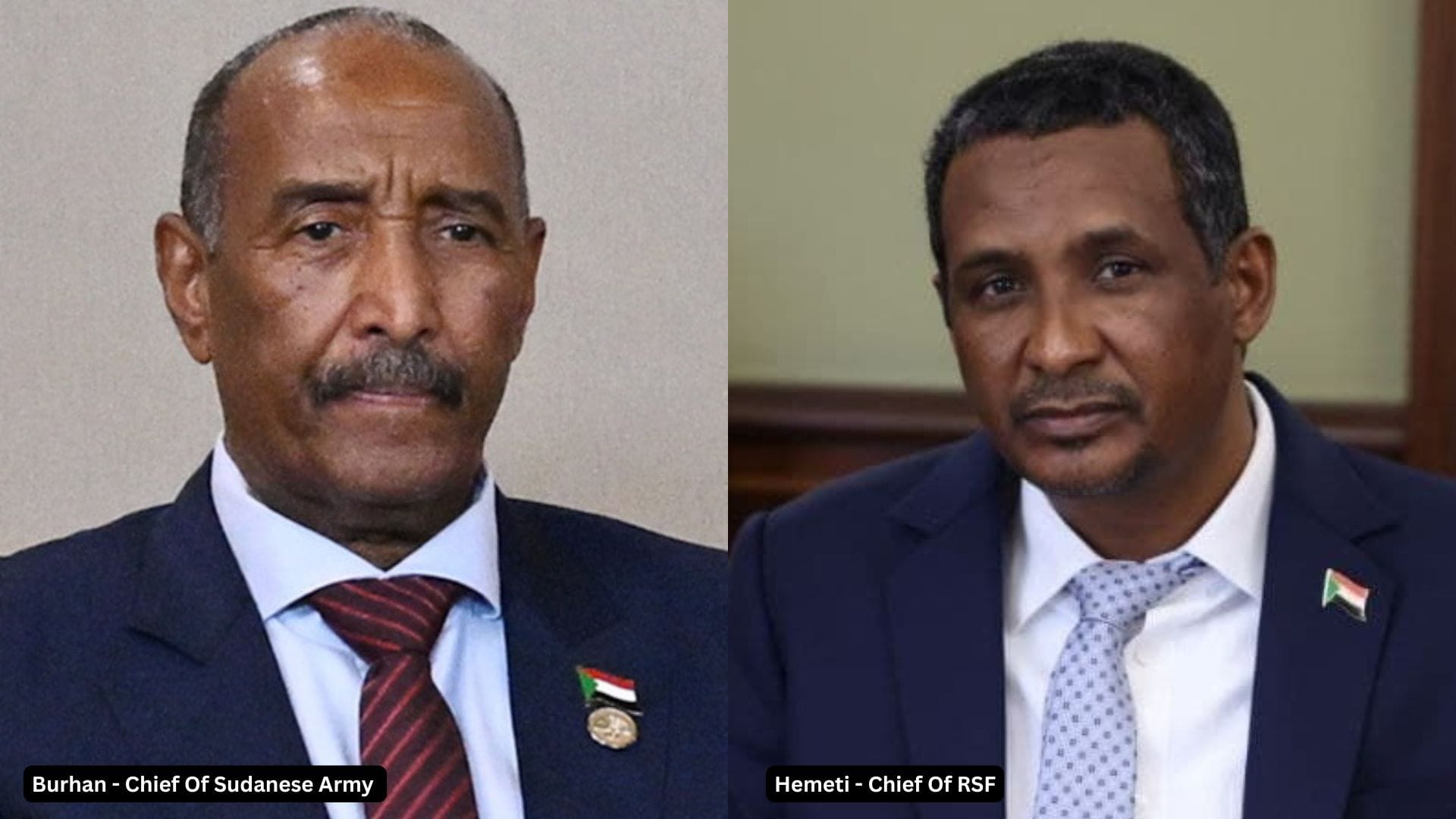
Today, Sudan is tearing itself apart — not between government and rebel, but between two opposing Sudanese army chiefs who once promised a future.
The Cycle of Coups
Sudan’s political history reads like a looped script. Since independence from Anglo-Egyptian rule, the military has held the true reins of power.
1958: the first coup.
1969: another.
1985: another.
1989: Bashir seizes control — and refines the formula for survival.
He mastered what political scientists call “coup-proofing”: setting up rival power centers to prevent any one faction from deposing him. But this strategy would later ignite the fire that burns the country today.
Bashir’s Shadow: The Birth of the RSF
Over the years of tyrannical rule, now ousted Bashir armed tribal militias known as the Janjaweed — forces infamous for atrocities: village burnings, mass killings, sexual violence. From these ranks emerged one commander, Mohamed Hamdan Dagalo, known as Hemeti. Bashir saw him as indispensable, even affectionately calling him “my protection.”
In 2013, Hemeti’s militias were rebranded as the Rapid Support Forces (RSF) — a paramilitary empire with control over gold mines and smuggling routes. By 2017, Hemeti commanded his own fortune and army. Bashir had created a rival too powerful to leash.
2019: A Revolution Hijacked
Economic collapse and rage over corruption drove millions into the streets in 2018. By April 2019, the military — led by Abdel Fattah al-Burhan and Hemeti — ousted Bashir. Protesters rejoiced, briefly. Then came the betrayal.
On June 3, 2019, RSF forces opened fire on peaceful protesters in Khartoum, killing more than a hundred. What began as liberation devolved into massacre.
Burhan vs. Hemeti: Brothers in Arms, Enemies in Power
Both men signed a power-sharing deal in 2020, promising a civilian-led government. But trust between them dissolved over one question — how fast to merge the RSF led by Hemeti into the national army led by Burhan. Burhan wanted two years. Hemeti wanted ten.
Now, their forces are locked in a brutal civil war.
Burhan commands air strikes.
Hemeti commands wealth.
Civilians pay the price.
El Fascia: The City That Fell Silent
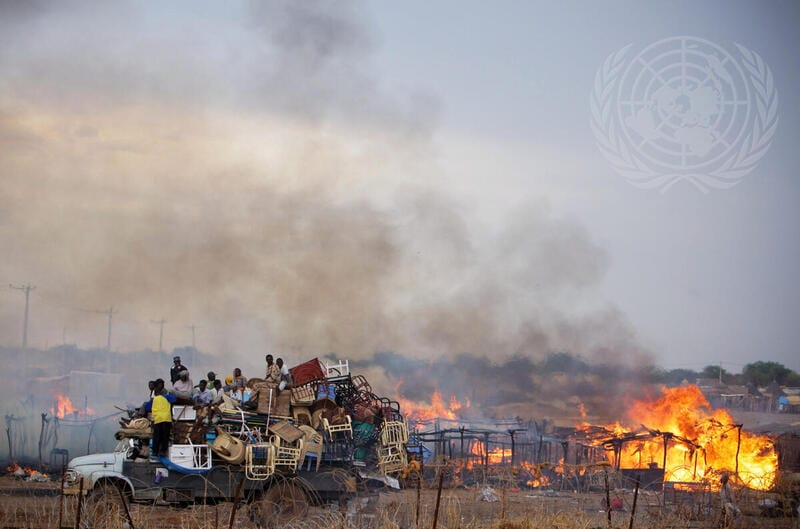
Last week, the paramilitary RSF seized the city of El Fascia. Witnesses describe scenes of horror — mass killings, sexual violence, and abductions. German Foreign Minister Yuan Vadiful called it “absolutely apocalyptic.”
The UN estimates 65,000 people have fled, with tens of thousands still trapped. Those who escape describe captivity, ransom, and terror and have now found refuge in nearby Tawila. Communal kitchens there are struggling to feed thousands at least one meal a day as they are working with limited resources.
The WHO confirmed the destruction of El Fascia’s maternity hospital — hundreds killed, doctors executed, patients shot where they lay. Humanitarian aid unable to enter and the city effectively erased.
When the World Watches
The principle of non-intervention has long been sacred in international politics — each nation sovereign in its suffering. But at what point does sovereignty become complicity?
When hospitals are bombed, when children starve, when the very concept of “civilian” loses meaning — intervention becomes not intrusion, but obligation.
Peace cannot be imposed. But democracy — true democracy — is the only architecture that prevents a country from repeatedly devouring itself.
Sudan’s tragedy is not only a civil war; it is a mirror. It reflects what happens when militaries become monarchies, and power ceases to serve the people who granted it.
Author
News cycles today feel more dehumanising than ever. Netizen's deserve journalist's that believe in the power of narratives to inspire positive change — putting activism before profits and creating a blend of journalism that is raw, human, and alive.
Sign up for The Fineprint newsletters.
Stay up to date with curated collection of our top stories.