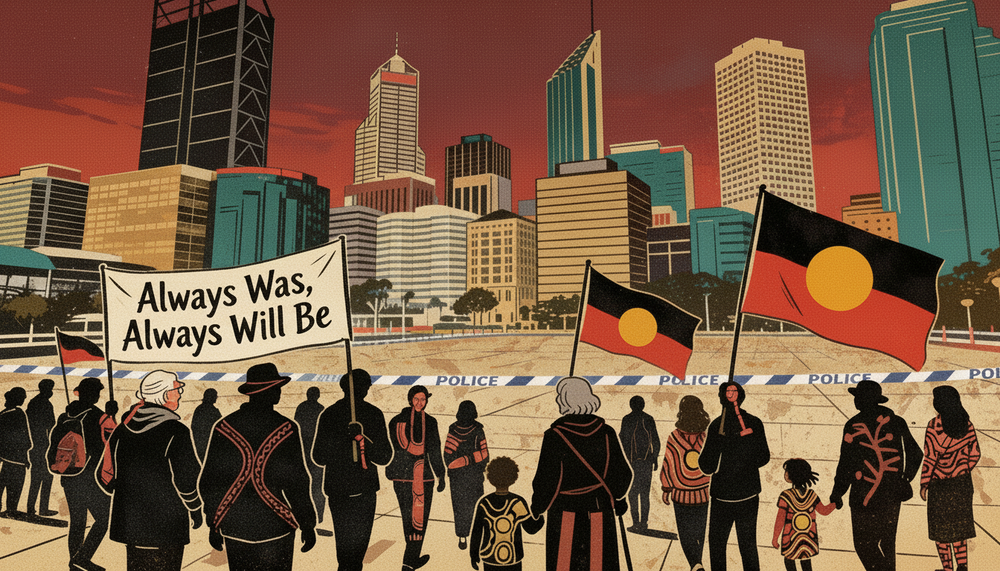
What began six years ago as what appeared to be a simple bureaucratic exercise — updating India’s National Register of Citizens (NRC) — has today spiralled into a full-scale crisis. For thousands of Muslims, particularly those of Bengali origin, the NRC has not clarified their citizenship but erased it. Despite being born and raised in India, despite belonging to its social and cultural fabric, many have found their names missing from official rolls or removed unofficially. The result? Mass evictions, bulldozer demolitions, and forcible expulsions into neighbouring Bangladesh.
Dehumanisation as Policy
For more than a decade, Prime Minister Narendra Modi’s BJP government has sharpened its rhetoric against minorities. Until the partition of India and the creation of Bangladesh in 1971, borders in Bengal were fluid, communities interlinked by language, culture, and trade. Today, that shared identity has been twisted into shrewd suspicion.
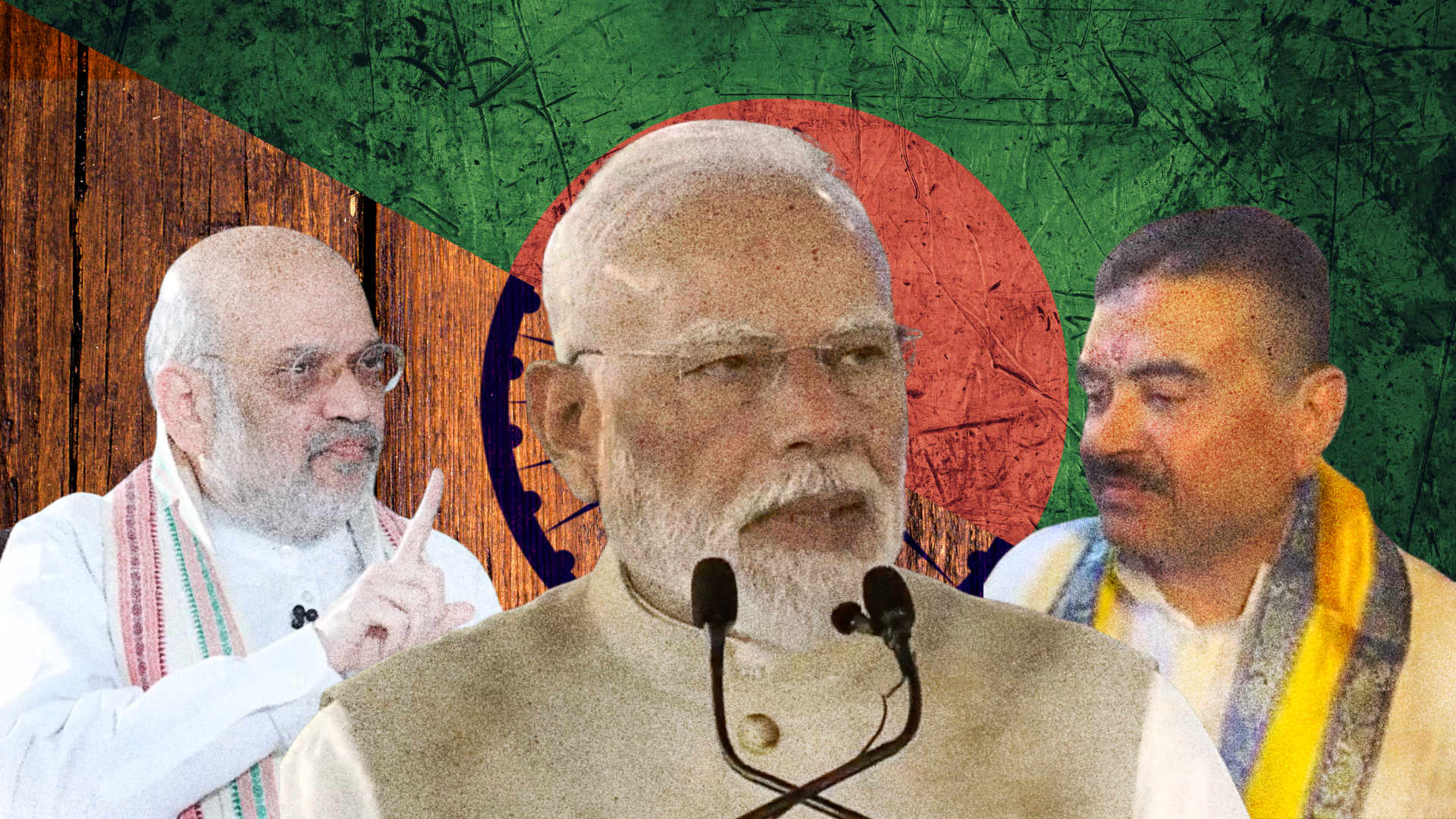
The language used is telling. Home Minister Amit Shah once referred to Undocumented Immigrants as “termites” — a word designed to strip people of humanity, to dull compassion and justify cruelty. When humans are reduced to pests, their suffering no longer provokes outrage; instead, it becomes policy. Bulldozers are now being used in BJP-run states like Assam, Uttar Pradesh, and Gujarat to demolish homes, mosques, and entire neighbourhoods of so-called “illegal Bangladeshis.” Local news channels even broadcast live demolition coverage, turning dispossession into spectacle, often without due process or proof of wrongdoing.
Expulsions Without Due Process
Between May and June 2025, Border Guard Bangladesh reported that India expelled over 1,500 — men, women, and children — across its borders.
Those expelled recount threats and assaults by India’s Border Security Force, with some forced across at gunpoint. Others were readmitted after proving their Indian citizenship, exposing the reckless arbitrariness of the expulsions. In Assam, where Foreigners Tribunals have operated since 1964, citizenship decisions may hinge on minor errors — a spelling discrepancy in documents, an omission in a testimony, even mismatched dates. Human Rights Watch has also documented how many cases are decided ex parte, in the absence of the accused, among many notices that are improperly served.
These tribunals are less about justice and more about exclusion. The 2019 NRC left nearly two million people off its rolls. Many still wait for appeals, in May this year, Human Rights Watch has reported Assam’s chief minister Himanta Biswa Sarma declared that expulsions would continue even without tribunal verdicts.
“If someone is identified as a foreigner, we won’t send them to a tribunal; we will just keep pushing them back,” he said.
The Politics of Victimhood
Behind these expulsions lies a deliberate political project. The BJP has cultivated a narrative that Hindus, who make up 80 percent of India’s population, are under threat — not from poverty, inequality, or corruption, but from their Muslim neighbours. This inversion of reality, painting the majority as victims of the minority, has become a powerful electoral tool.
This narrative has collapsed distinctions between Indian Muslims and immigrants, ensuring that many Bengali speakers in West Bengal or Assam face the same suspicion as migrants across the border.
West Bengal’s chief minister Mamata Banerjee has condemned this, asking pointedly: “Is speaking Bengali a crime?” While Suvendu Adhikari, leader of the BJP in West Bengal has gone viral for hurling derogatory slurs at a Bengali resident for chanting "joy Bangla," — onward bengal, instead of a religious chant.
Toward a Religious State?
The expulsions and demolitions are not isolated abuses — they are part of a larger drift toward a religious theocracy. India is a signatory to the International Covenant on Civil and Political Rights and the International Convention on the Elimination of All Forms of Racial Discrimination. Both require protection against deprivation of citizenship based on ethnicity, religion, or descent. Yet India’s actions are in open defiance of these obligations.
What is left in the rubble is not just demolished homes or displaced families, but the foundations of India’s secular promise. The world’s largest democracy is now testing how far it can erode due process, minority rights and still pride itself in being democratic.
A Different Kind of Religious Turn Across The Border
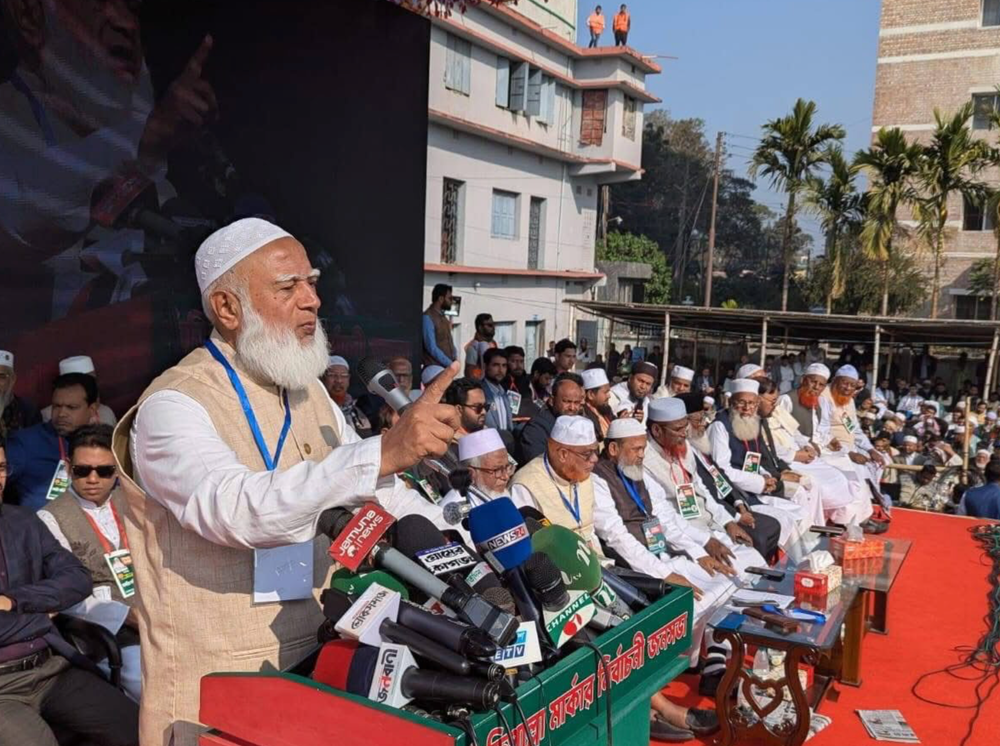
In striking contrast to India’s Hindu-nationalist project, Bangladesh is now seeing the re-entry of Islamism into its political mainstream. The recent unbanning of Jamaat-e-Islami (JI) — the country’s largest Islamist party — underscores this shift.
In 2013, the High Court stripped the party of its registration, ruling it “unfit” to contest elections because its charter placed religious doctrine above the democratic process. At the heart of Jamaat’s ideology is a drive to establish an Islamic state governed by Sharia law and to reorient Bangladesh’s legal, cultural, and political life around what it calls “an Islamic code of life.”
The latest unbanning reverses a decade-long judicial curb. While India is bulldozing Muslim homes under the rhetoric of Hindu victimhood, Bangladesh is opening space for a party that seeks to institutionalise Islam as the foundation of statehood.
As political parties presenting themselves as moral agents of a higher order, these movements make questioning them not just a political act but, in the eyes of many of their followers, an act of blasphemy.
For many in the region — political dynasties, crony networks, and graft scandals have eroded public faith in secular governance. Divine appeals cut through cynicism: if earthly leaders cannot be trusted, then leaders claiming heavenly mandate appear untainted.
Democracy across South Asia is being redefined through religion: in India, by shrinking Muslim belonging under Hindu majoritarianism and in Bangladesh, by allowing Islamist forces to reshape the secular promise at independence.
Author
News cycles today feel more dehumanising than ever. Netizen's deserve journalist's that believe in the power of narratives to inspire positive change — putting activism before profits and creating a blend of journalism that is raw, human, and alive.
Sign up for The Fineprint newsletters.
Stay up to date with curated collection of our top stories.