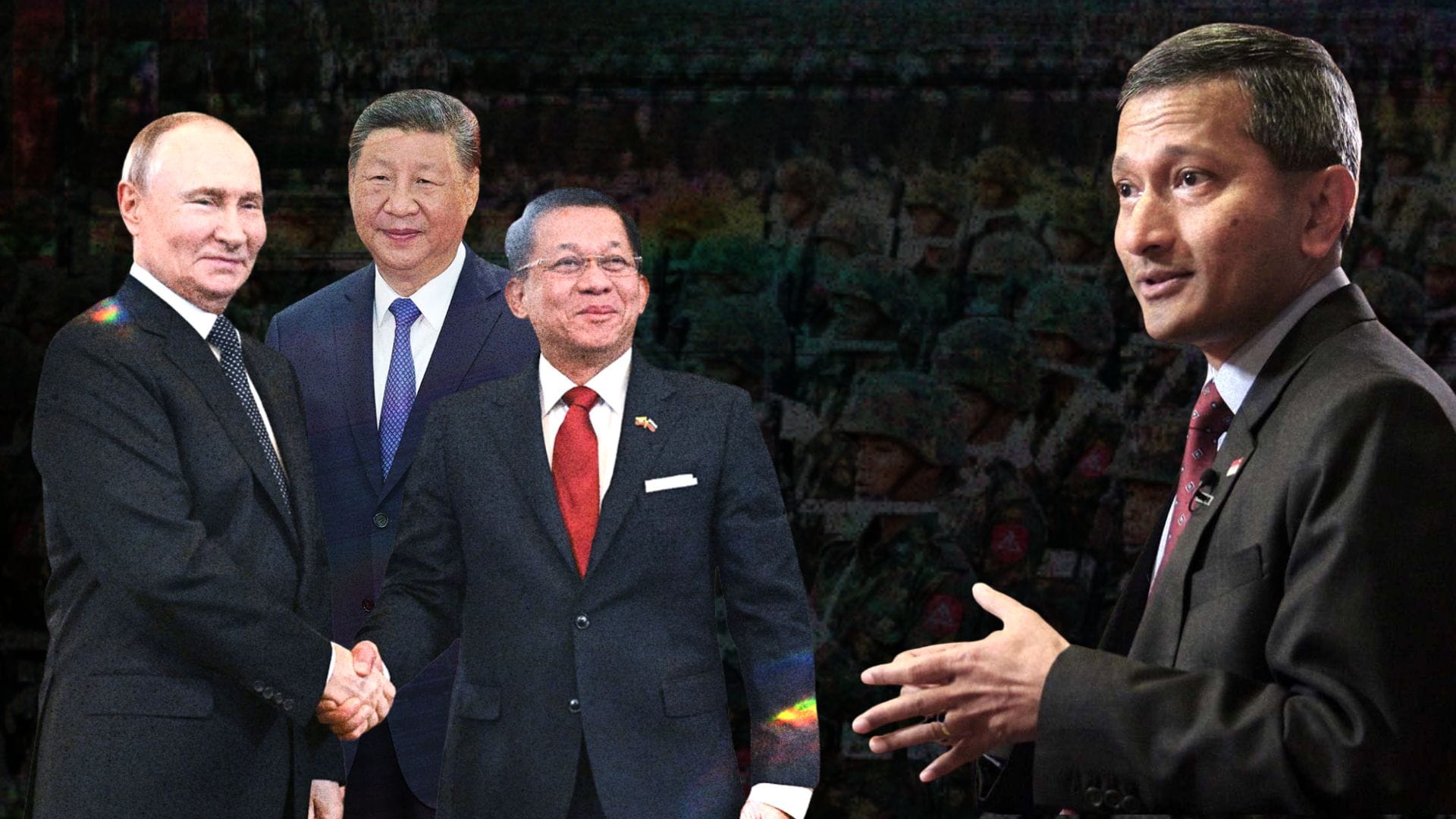
Myanmar/Singapore: On 28 December, Myanmar’s junta will stage what it calls a “general election.” In reality, it is neither general nor an election in any meaningful sense. The generals who seized power in the 2021 coup are not handing back democracy; they are dressing military rule in civilian clothes.
The junta lifted its four-year state of emergency, set up a “caretaker civilian government,” and promised phased polls across more than 100 of Myanmar’s 330 townships. But this is theatre, not transition. 41 Opposition parties are banned. Resistance leaders are jailed or exiled on skewed charges. And 25% of parliamentary seats remain reserved for the military regardless of results. The outcome is already written.
The timing tells its own story. The army has lost unprecedented amounts of territory since 2021 thanks to multiple democratic resistance fronts, with estimates suggesting it controls little more than a fifth of the country outside major cities. The military hopes an “election” will paper over these losses and buy legitimacy — especially abroad.
Enter Beijing and Moscow
If Myanmar’s people are the biggest losers, the biggest enablers are clear: China and Russia. Both have shielded the junta at the UN, continued to sell weapons, and provided political cover. Beijing, in particular, has pressured the generals to stage an election — not out of democratic idealism, but to protect its economic assets and corridor that links Yunnan to the Indian Ocean. Policy experts have mentioned for China, “stability” means a weak but pliant regime in Naypyidaw, no matter how illegitimate.
Russia, facing its own pariah status after Ukraine, sees Myanmar as an arms market and a symbol of defiance against Western pressure. Together, Beijing and Moscow are ensuring Myanmar’s generals remain supplied, armed, and diplomatically insulated — while millions of civilians pay the price.
Singapore’s Dilemma
And here’s where it matters to us. Halfway between rhetoric and reality lies Singapore’s role. On paper, Singapore has taken a strong line — condemning violence, insisting on ASEAN’s Five-Point Consensus (which is now declared a failure by human rights watch), and tightening export controls. Local banks have been told to stop servicing junta-linked accounts. Authorities have investigated firms flagged by the UN for trading arms and dual-use goods with Myanmar’s military.
But the numbers tell a different story. Singapore remains one of Myanmar’s top foreign investors, with approximately more than US$446 million tied up in energy, oil, gas, and manufacturing. Justice For Myanmar reported that even after the coup, companies based here continued land-lease payments to military-linked entities. Critics argue that while we may not openly back the generals, Singapore’s financial system and business ties (as late as 2025) have quietly helped keep their regime afloat.
The question is uncomfortable: can Singapore claim the moral high ground while its companies and capital flow into junta-controlled ventures?
Why It Matters
For Southeast Asia, Myanmar’s future is not a distant problem. A war-torn neighbour at our doorstep destabilises the region, strains ASEAN unity, and opens space for Beijing and Moscow to redraw the rules of engagement in our backyard. For Singapore, the stakes are even sharper: our reputation as a principled, rules-based financial hub is at risk if our firms are seen as conduits for blood money.
The generals in Naypyidaw may think an “election” will buy them legitimacy — Russia and China may be happy to "play" along. But for Singapore, the real question is whether we continue walking the line between principle and profit — or whether we finally take a harder stance that matches our words with deeds.
Disclaimer: This article reflects the author’s personal commentary on current affairs. It draws on publicly available sources, which are linked for transparency and further reading. Readers are encouraged to review these materials and form their own conclusions.
Author

News cycles today feel more dehumanising than ever. Netizen's deserve journalist's that believe in the power of narratives to inspire positive change — putting activism before profits and creating a blend of journalism that is raw, human, and alive.
Sign up for The Fineprint newsletters.
Stay up to date with curated collection of our top stories.