
The Panj River cuts a 921-kilometer scar between Tajikistan and Afghanistan, a liquid border drawn by empires playing their "Great Game" across Central Asian dust. On one side, women must cover their faces or face detention. On the other, women who cover their faces are fined and denied entry to universities, hospitals, schools. Between these banks flows the same story—authoritarian control masquerading as order, oppression dressed as virtue, the erasure of women's agency packaged as protection.
This is not a story of Islam versus secularism. This is a story of power, and what men do with it when they claim to act for something greater than themselves.
The Architect of Order
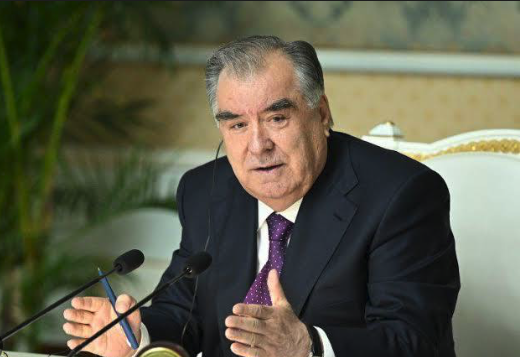
Emomali Rahmon has ruled Tajikistan for 31 years. He came to power during a civil war that killed between 20,000 and 150,000 people from 1992 to 1997, depending on whose count you trust—though all agree the dead numbered in the tens of thousands. The war pitted his government forces against the United Tajik Opposition, a coalition that included the Islamic Renaissance Party alongside democrats and nationalists.
The peace agreement in 1997 promised the opposition 30 percent representation in government. That promise aged like fruit in the sun.
By 2015, the Islamic Renaissance Party—once the only legal Islamic party in Central Asia—was banned, declared a terrorist organization, some of its leaders sentenced to life imprisonment. The party had been moderate, secular in governance, democratic in structure. It had nominated a woman who didn't wear hijab as a candidate. Its slogan read "We are for Tajikistan, and Tajikistan is for everybody". None of this mattered when Rahmon decided opposition itself was extremism.
In 2016, constitutional amendments removed presidential term limits entirely. His son Rustam Emomali, now 37, simultaneously serves as Chairman of Parliament and Mayor of Dushanbe. In the March 2025 parliamentary elections, Rahmon's People's Democratic Party secured 49 of 63 seats. The five parties allowed representation all support the president. International election observers were denied cooperation; the OSCE cancelled its mission.
This is what performative democracy looks like—the stage set, the actors in costume, the script memorized, the ending predetermined.
When Fabric Becomes a Crime
The campaign against the hijab began quietly in 2007 with a Ministry of Education directive banning headscarves in schools. By 2009, the prohibition extended to all public institutions. Women were stopped at university gates, their enrollment documents handed back with explanations that hijab made attendance "impossible". Employers issued ultimatums—remove the headscarf or lose the job.
For years, enforcement operated in legal shadow—task forces patrolling streets, police raids on markets, women detained and fined under unwritten rules. But on June 20, 2024, shadow became law. Parliament formalized the ban on "clothing alien to Tajik culture," with fines ranging from $740 for individuals to $5,060 for religious figures.
Two months later, the Ulema Council—the government's sanctioned Islamic authority—issued a fatwa prohibiting women from wearing the full hijab & niqab. The parameters of permissible dress narrowed further. Women reported being warned they'd face fines when entering medical facilities. Schools, universities, hospitals, government buildings—the doors began closing to women whose clothing choices fell outside state-approved parameters.
The state determined what counted as "Tajik." The state measured compliance. The state enforced conformity through the threat of poverty and exclusion.
Men faced parallel persecution. In 2015, police in Khatlon region forcibly shaved nearly 13,000 men, claiming beards signaled extremism. Human rights activist Rustam Gulov described being detained and shaved against his protest, noting a large pile of beard shavings on the police station floor—the accumulated evidence of the day's work.
Experts noted the obvious—banning religious appearance doesn't eliminate extremism. It manufactures resentment. Political analysts warned the policy decision "designed to counter radicalism, is itself a clear catalyst for radicalism". But authoritarian logic operates differently. When you cannot solve a problem, you can always hide its visible signs.
The Economics of Desperation
Approximately 1.2 million Tajik citizens work in Russia—16 percent of all foreign workers there. Estimates vary because both governments prefer not to emphasize the dependency. Some sources cite figures as low as 500,000; others suggest 1.6 million departed in a single year. The exact number matters less than what it represents—roughly one-quarter of Tajikistan's working-age population has left.
The World Bank notes that poverty reduction in Tajikistan stems primarily from remittances and rising incomes within existing jobs—not from domestic job creation or structural economic transformation.
Those remittances represent between 48 and 49 percent of Tajikistan's GDP according to World Bank data, though Russian officials cite 17 percent using different methodology. Regardless of the precise figure, the dependency is existential. In 2024, Tajik workers sent home over $1.8 billion. These transfers keep families above the poverty line, finance imports, sustain household consumption, and underpin social stability.
The arrangement creates a perverse incentive structure. The government that bans religious expression, eliminates political opposition, consolidates family rule, and restricts civil liberties depends on its citizens' willingness to leave—to seek dignity and income across borders rather than demand it at home. Those who depart cannot organize. Those who remain lack the economic leverage to resist.
Migration becomes both symptom and sustaining mechanism of authoritarian control.
Across the River, a Mirror Image
Since the Taliban's return to power in Afghanistan in August 2021, women and girls have been subjected to more than 130 edicts restricting their lives. Girls cannot attend school beyond seventh grade. Women cannot work in most sectors, cannot travel without a male guardian, cannot enter parks, museums, restaurants, gyms, or even female-only beauty salons.
In May 2022, the Taliban decreed women must wear full-body coverings when in public. The August 2024 "Promotion of Virtue and Prevention of Vice" Law codified women's erasure from public life, stipulating women must cover "voice, face, and body" when leaving home for essential needs. Women's voices are banned from being heard outdoors.
The parallels shimmer across the Panj River's surface. In Afghanistan, the hijab is mandatory; women are punished for removing it. In Tajikistan, the hijab is banned; women are punished for wearing it. In both nations, the state claims authority over women's bodies, enforces conformity through legal coercion and physical violence, and excludes women from education and healthcare based on clothing choices. In both nations, women are caught between state power and patriarchal pressure, between laws they did not write and punishments they cannot escape.
The ideological packaging differs—religious fundamentalism versus secular nationalism, theocracy versus autocracy—but the lived experience converges. Women lose autonomy. Women lose access. Women lose voice. The state determines what constitutes virtue, and men enforce it.
Author
News cycles today feel more dehumanising than ever. Netizen's deserve journalist's that believe in the power of narratives to inspire positive change — putting activism before profits and creating a blend of journalism that is raw, human, and alive.
Sign up for The Fineprint newsletters.
Stay up to date with curated collection of our top stories.


