In a stunning development that further reshapes the geopolitical landscape of the Western Hemisphere, President Donald Trump announced on Wednesday that interim authorities in Venezuela will be transferring a massive quantity of crude oil to the United States.
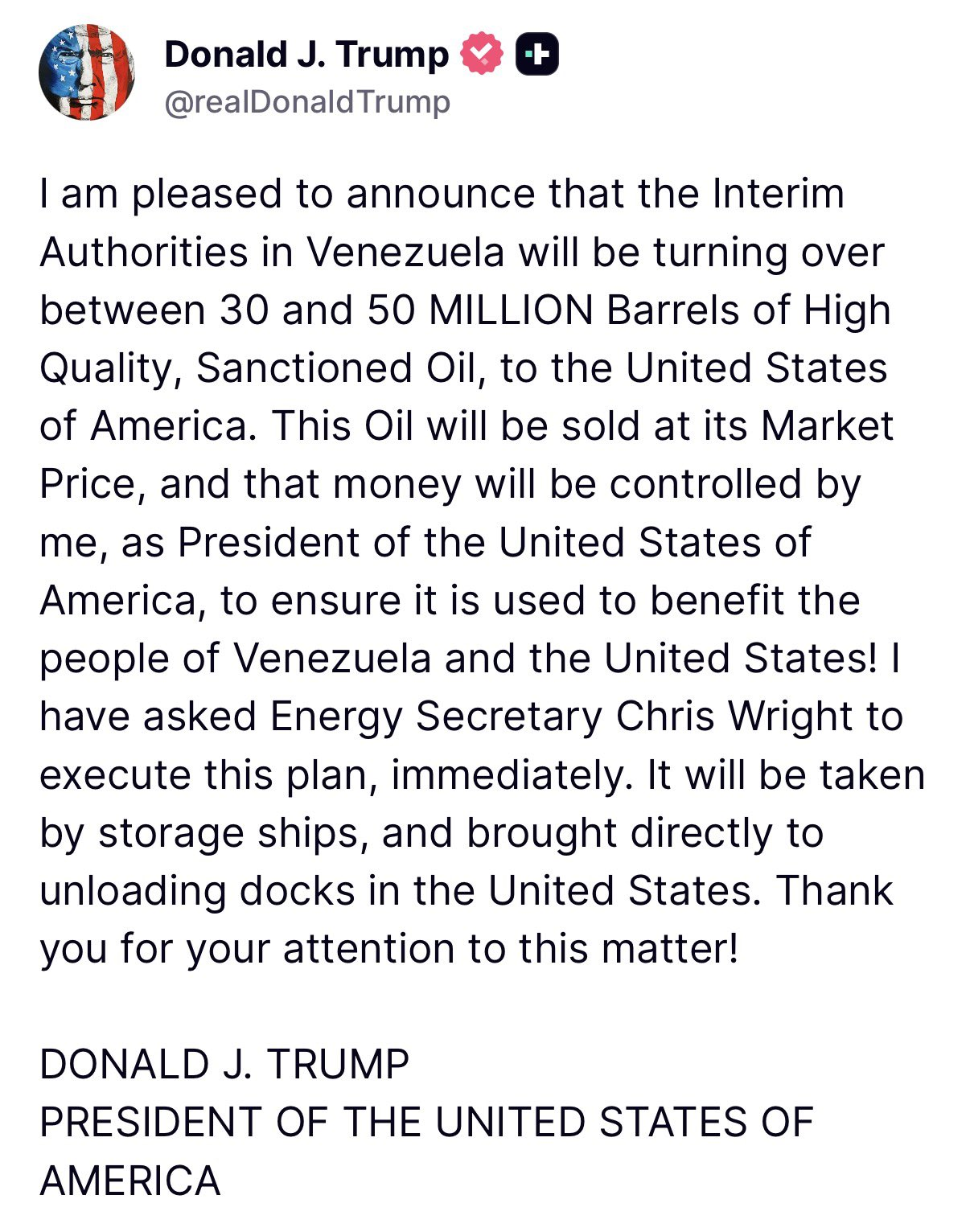
In a statement posted to his Truth Social platform, Trump declared, "I am pleased to announce that the Interim Authorities in Venezuela will be turning over between 30 and 50 MILLION Barrels of High Quality, Sanctioned Oil, to the United States of America."
The announcement comes just days after a dramatic U.S. military operation in Caracas resulted in the capture of Venezuela's long-time authoritarian leader, Nicolás Maduro.
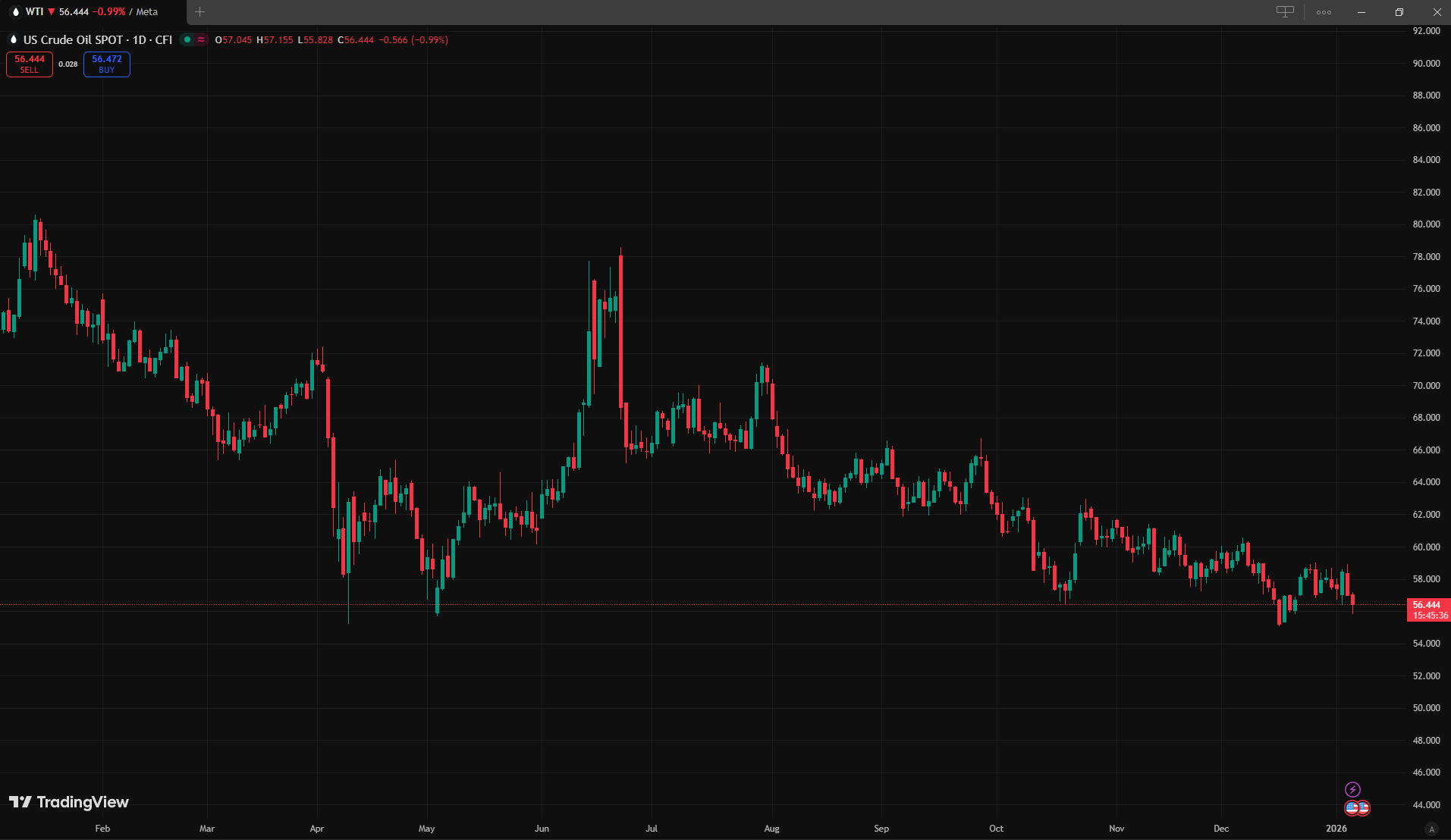
According to Trump's statement, the oil will be sold at market prices. He asserted a direct role in managing the significant financial proceeds from the sale, stating the funds "will be controlled by me, to ensure it is used to benefit the people of Venezuela and the United States." He added that he has instructed U.S. Energy officials to implement the plan immediately, specifying that the oil would be transported via storage tankers directly to U.S. discharge ports. At current market rates, the estimated value of the shipment could exceed $2.5 billion.
This unprecedented transfer of national resources marks a new and aggressive phase in the deeply troubled relationship between Washington and Caracas, a saga defined by decades of political antagonism, crushing economic sanctions, and diplomatic standoffs.
A History of Hostility and Economic Warfare
The backdrop to this week's events is a nearly two-decade deterioration in relations, beginning under the presidency of Hugo Chávez and accelerating dramatically under his successor, Nicolás Maduro. The United States has long accused the Venezuelan government of human rights abuses, corruption, narcoterrorism, and dismantling democratic institutions.
Starting in the mid-2000s, the U.S. began imposing targeted sanctions on Venezuelan individuals and entities associated with drug trafficking and terrorism. These measures escalated significantly starting in 2014 under the Obama administration in response to violent crackdowns on protesters.
The economic pressure campaign reached its zenith during Donald Trump's first term. His administration imposed sweeping sanctions on Venezuela's state-owned oil company, PDVSA, effectively cutting off the country's primary source of revenue from the U.S. market. In 2019, the U.S. led a coalition of over 50 nations in recognising opposition leader Juan Guaidó as the legitimate Interim President, declaring Maduro's 2018 re-election fraudulent.
While the "maximum pressure" campaign crippled Venezuela's economy, leading to hyperinflation and a massive humanitarian crisis that displaced millions, it failed to dislodge Maduro from power. Guaidó's interim government eventually lost momentum and international support, officially dissolving in January 2023. The Biden administration briefly eased some oil sanctions in exchange for promises of free elections, but reimposed them after the Maduro regime failed to uphold its end of the bargain.
The Turning Point: Operation Absolute Resolve
The long-standing stalemate was shattered last weekend with what the Pentagon dubbed "Operation Absolute Resolve." In a high-risk, dead-of-night raid in the Venezuelan capital, U.S. military forces captured Nicolás Maduro, who had been indicted in the U.S. on narcoterrorism charges since 2020.
The operation was not without cost. Venezuelan officials reported that at least 24 security officers were killed during the assault. The Cuban government also confirmed the deaths of 32 of its military and police personnel stationed in the country. The Pentagon acknowledged that seven U.S. service members were injured in the firefight.
Following the operation, a tense and uncertain political vacuum has emerged in Caracas. While Trump refers to working with "Interim Authorities," the exact composition of this body remains unclear. Reports indicate that figures from the previous administration, including acting president Delcy Rodríguez, remain in positions of power but are facing immense pressure to align with U.S. directives.
White House officials are reportedly scheduling meetings with executives from major U.S. oil companies, including Chevron and ExxonMobil, to discuss plans for rehabilitating Venezuela's dilapidated energy infrastructure. Despite holding the world's largest proven oil reserves, Venezuela's production has fallen from over 3 million barrels per day to roughly 800,000 due to mismanagement and sanctions.
The transfer of millions of barrels of oil, combined with the direct U.S. control over the proceeds, signals a de facto U.S. management of Venezuela's primary economic asset in the post-Maduro era. As the international community watches closely, the ultimate goal of stabilising the nation and restoring democratic governance remains a formidable and deeply uncertain challenge.
Author

I hold a deep passion for tracking and analyzing the latest corporate performance and broader financial news. I enjoy understanding how these developments shape market trends and investment strategy.
Sign up for The Fineprint newsletters.
Stay up to date with curated collection of our top stories.